

Battery storage for solar parks: more revenue from existing generation

Made in Germany
Engineering, production and service in Germany

Everything from a single source
Planning, engineering, construction and operation

Experienced team
Engineers with years of experience in energy infrastructure

In-house control & EMS
Maximum control and flexibility

Plug & Play
Turnkey, quick to integrate, maximally reliable
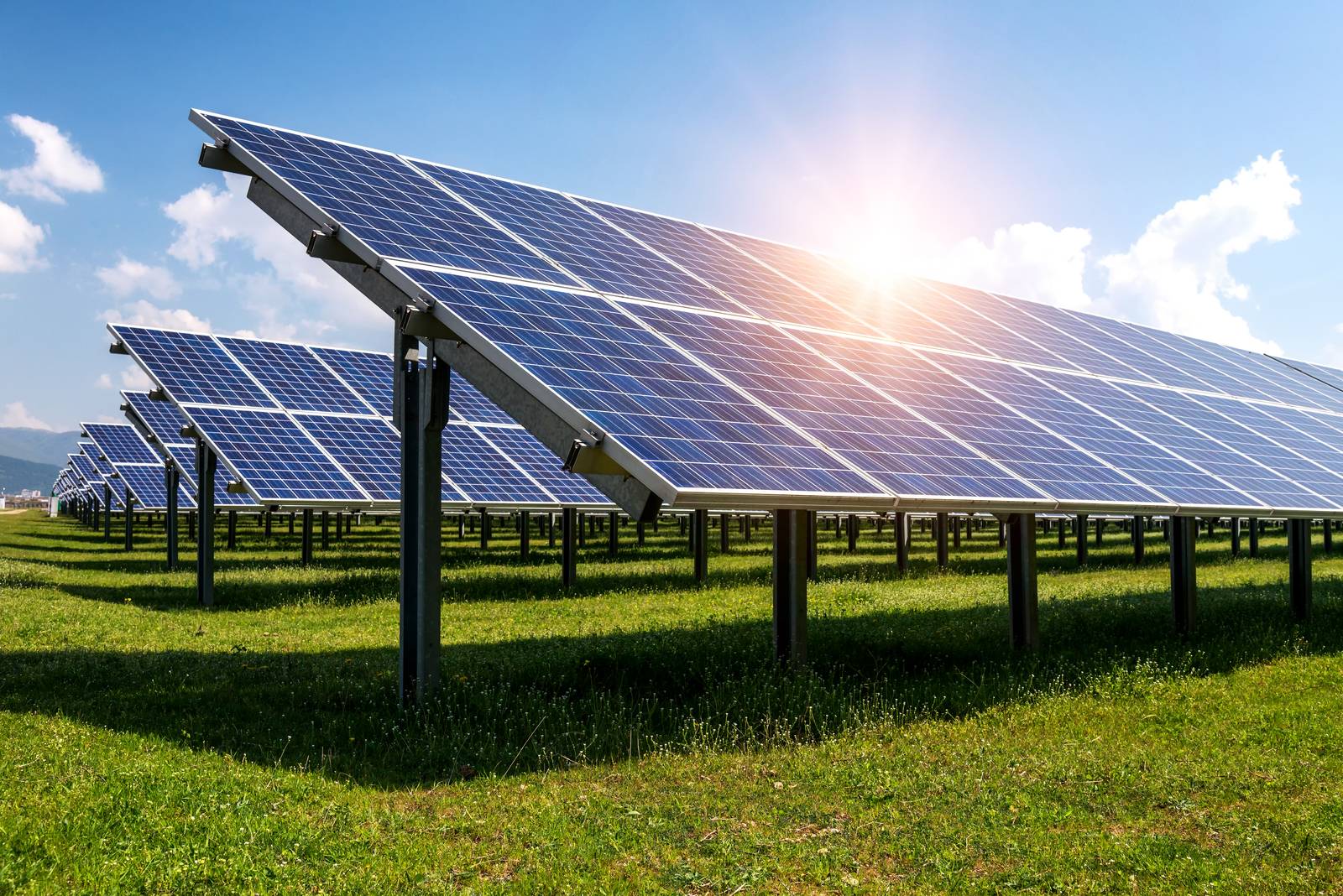
Solar parks do not generate their electricity evenly throughout the day but concentrated around midday - precisely when the grid often has the least capacity available and electricity prices on the market are low. Battery storage for solar parks addresses exactly this: it absorbs the solar power that would otherwise have to be curtailed or fed in at unfavourable prices and makes it usable at a later, more profitable time. GEPVOLT plans, builds and operates battery storage for solar parks - both as co-location at existing installations and as a hybrid power plant with new PV projects.
A large-scale storage system directly at the solar park breaks this pattern of losses - regardless of the age of the installation or the underlying subsidy model. For operators who want to increase the value of their existing solar installations, it is one of the few additions that has a direct impact on revenue without changing power generation itself.
Operating a wind farm? Battery storage for wind farms
Starting point
Why solar parks lose revenue without battery storage
In practice, two factors above all reduce the returns of ground-mounted PV installations: grid curtailment and the drop in prices at midday.
Curtailment due to grid congestion
If the capacity of the grid connection or the upstream grid is not sufficient to absorb the full output of a solar park, the grid operator orders curtailment. The solar power generated during this time is lost, even though the installation could technically deliver more electricity. A battery storage system at the grid connection point absorbs precisely this surplus output instead of letting it go to waste.
Midday peak meets low electricity prices
On sunny days, many solar parks generate their highest output at the same time - the so-called midday peak. When this oversupply of solar power meets comparatively low demand, electricity prices on the market fall to a low level in precisely these hours, sometimes even into negative territory. A battery storage system decouples production and marketing: the solar power is stored temporarily and only sold when prices are more attractive again.
Making better use of limited grid connection capacity
Many solar parks are planned larger than the existing grid connection actually allows - a deliberate overbuild that can only be exploited economically with a battery storage system. Without storage, the generation peak above the connection capacity simply has to be curtailed. With a battery storage system at the same grid connection point, this peak can instead be absorbed and fed in with a time delay, so that the investment in the park and the grid connection is used much more effectively.
For customers planning to expand their solar park beyond the originally approved connection capacity, this is a relevant challenge: additional grid expansion is often expensive and time-consuming, whereas a battery storage system at the same grid connection point can be implemented much faster. This makes it possible to increase the PV installation’s generation economically without having to wait for a new grid connection commitment.
Co-location
Co-location and hybrid power plant at the solar park
A battery storage system can be combined with a solar park in two ways: as a stand-alone co-location installation or as an integrated hybrid power plant.
Storage at a shared grid connection point
With co-location, the battery storage system is built at the solar park’s existing grid connection point and shares its existing grid connection with the PV installation. This saves separate approval and connection costs and shortens the implementation time compared with a separate storage project elsewhere.
Hybrid power plant combining PV and battery storage
In a hybrid power plant, the solar installations and the battery storage system are planned and controlled as a single technical unit from the outset. This close integration allows finer coordination between generation, storage and marketing than a subsequent combination of two separate installations.

Retrofitting existing solar parks with battery storage
Older solar parks can also be retrofitted with a battery storage system. This is particularly interesting for installations whose grid connection regularly leads to curtailment, or whose subsidy period is expiring and which depend on additional revenue from marketing. With every retrofit, GEPVOLT assesses how the battery storage system can be integrated into the existing plant technology without affecting the ongoing operation of the existing installation.
For customers with older solar parks, retrofitting is often the most economically attractive option, because the modules themselves have already been written off and the additional investment only has to pay for itself through the new revenue streams of the battery storage system. GEPVOLT checks technically whether the existing grid connection capacity and the actual solar energy production allow an economical design of the storage system and sizes the addition accordingly.
Technically, the main question when retrofitting is the coupling: with AC coupling, the battery storage system is connected to the solar park’s existing AC network via its own inverter - the simplest and least invasive solution, because the park’s existing plant technology remains unchanged. With DC coupling, the storage system is instead integrated on the DC side upstream of the existing inverters, which enables higher efficiencies but requires deeper intervention in the existing electrical system. GEPVOLT assesses individually for each solar park which of the two options is the better choice economically and technically.
Profitability
How battery storage improves profitability
Beyond simply shifting solar power in time, a large-scale storage system opens up additional sources of income for the PV installation.

Energy shifting: moving solar power into high-revenue hours
Through so-called energy shifting, solar power from the low-price midday peak is shifted into evening or morning hours with higher demand and better prices. This allows the same energy generated to be marketed at a much better price instead of having to be fed in at the least favourable time.
Cushioning negative electricity prices
In addition to pure energy shifting, the battery storage system also specifically protects the solar park against periods of negative electricity prices: instead of paying for feed-in during such hours, the stored energy remains in the battery storage system until market conditions improve again. In addition, fluctuations in the grid can be balanced through grid services on the balancing power market: the storage system provides or absorbs power at short notice, regardless of how much solar energy the park is currently producing. For solar park operators, this creates a third, stable revenue stream alongside energy shifting and the feed-in tariff alone.
Design
Designing the solar park storage system: capacity and power
A battery storage system for a solar park is not sized on a flat-rate basis, but according to the actual generation profile of the respective installation.
Sizing according to the installation’s generation profile
Capacity and power depend on the size and orientation of the PV installations, the level and frequency of curtailment events and the available grid connection capacity. GEPVOLT determines the appropriate design on the basis of the solar park’s generation data, so that the battery storage system is adapted to the installation’s actual needs rather than to general rules of thumb.
Storage technology and service life
When selecting the storage technology, the focus - besides capacity alone - is above all on cycle stability, as a solar park storage system goes through comparatively frequent cycles due to the daily charging and discharging profile. GEPVOLT relies on battery cells with a long service life so that the investment costs pay off reliably over the entire life of the installation. Regarding cell chemistry: GEPVOLT currently relies on lithium iron phosphate (LFP); the use of sodium-ion cells is planned for the future. This decision has a direct impact on the service life and thus the profitability of the entire solar park storage system. A battery management system continuously monitors the voltage, temperature and state of charge of every single module, so that deviations are detected early, before they affect the service life of the entire installation. Especially for solar park storage systems, which are subjected to greater stress through daily cycling than pure emergency power applications, this close monitoring is a key factor for a reliable profitability calculation over the entire term.
Process
From planning to operation of the battery storage system
As a full-service partner, GEPVOLT handles all project steps - from the initial site assessment to day-to-day plant operation.
Feasibility and revenue forecast for the solar park
The first step is a feasibility study: how high is the share of curtailed energy, how much do electricity prices fluctuate at the midday peak, and what additional revenue can be derived from this for a battery storage system? On this basis, GEPVOLT prepares a robust revenue forecast for the planned solar park storage system. To do so, GEPVOLT uses historical weather data, the park’s existing yield report and the actual curtailment data from previous years of operation, where available. This allows the additional revenue from the battery storage system to be estimated much more accurately than with general rules of thumb.
Approval, grid connection and operation of the storage system
This is followed by planning and approval, technical integration at the shared grid connection point, as well as assembly and commissioning. During ongoing operation, GEPVOLT takes care of maintenance, monitoring and - depending on the agreed model - the marketing of the stored solar power, so that operators and customers have a consistent point of contact for the entire system.
FAQ
Frequently asked questions about battery storage in solar parks
Is battery storage also worthwhile for a smaller solar park?
Yes. What matters is less the total output of the solar park than the frequency of curtailment and the extent of the midday peak at the respective site. Smaller installations also benefit if these effects occur regularly.
Can battery storage also be retrofitted to a solar park that already receives subsidies?
Yes, this is in fact one of the most common applications. The storage system is operated and marketed as a stand-alone installation, independently of the original installation’s subsidy.
What is the difference between co-location and a true hybrid power plant?
With co-location, the solar installations and the battery storage system remain two separate installations that merely share the grid connection point. In a hybrid power plant, both are planned as a single technical unit from the outset and controlled together.
How long does it take to implement a battery storage project at a solar park?
Depending on the grid connection and approval situation, the period from the initial feasibility study to commissioning depends on the individual case. We will give you a specific assessment after the initial review.
How does battery storage affect the marketing of solar energy?
The storage system decouples production and marketing: solar energy generated at the midday peak no longer has to be sold immediately at low prices. For customers and operators, this means more predictable revenue, because the time of sale can be controlled specifically.
Get in touch
We are here for you and look forward to your message.
